
November 6, 2025
Many firms underestimate cybersecurity for financial advisors, assuming basic protections are enough. Discover the five assumptions that expose client data and compliance and how to strengthen your firm’s security strategy.
Share this article

Cybersecurity for financial advisors requires more than basic IT support, multi-factor authentication, or backups. Advisory firms handle sensitive client and financial information and rely on email, cloud platforms, endpoints, custodial systems, and third-party vendors each of which can create pathways for unauthorized access, fraud, data exposure, or operational disruption.
Common threats include phishing and business email compromise, credential theft and account takeover, ransomware, endpoint compromise, data exposure, and third-party incidents. Common gaps are often operational as much as technical: unclear ownership, inconsistent access controls, incomplete monitoring, weak vendor oversight, and untested incident-response or recovery processes.
This article examines five dangerous assumptions that can create those gaps and shows financial advisory firms what to evaluate when strengthening cybersecurity without confusing a checklist with a complete security program.
Table of Contents
Hide
- 1. What Cybersecurity Threats Are Financial Advisors Most Vulnerable To?
- 2. What Are the Most Common Cybersecurity Gaps in Independent Advisory Firms?
- 3. Assumption 1: “Our IT Provider Handles Everything”
- 4. Assumption 2: “We’re Too Small to Be Targeted”
- 5. Assumption 3: “Compliance Equals Security”
- 6. Assumption 4: “We Already Use MFA and Backups”
- 7. Assumption 5: “Our Team Knows Better Than to Click Suspicious Links”
- 8. What Financial Advisors Actually Need
- 9. Conclusion
- 10. Is Your Firm Confident in Its Cybersecurity Coverage?
- 11. Related Articles
What Cybersecurity Threats Are Financial Advisors Most Vulnerable To?
Financial advisors are commonly exposed to phishing and business email compromise, credential theft and account takeover, ransomware, endpoint compromise, unauthorized access to client information, and third-party or vendor incidents.
Because advisory firms rely heavily on email, cloud applications, custodian portals, CRM systems, and external providers, one compromised identity or workflow can create broader business impact.
The highest-risk scenarios often combine technical and human factors. A stolen credential may lead to mailbox or application access; a convincing message may trigger an unauthorized request; a vendor incident may expose data or interrupt operations; and ransomware can create both security and recovery challenges.
Effective cybersecurity therefore has to address identities, devices, people, vendors, monitoring, incident response, and recovery as a coordinated program.
What Are the Most Common Cybersecurity Gaps in Independent Advisory Firms?
Common cybersecurity gaps include incomplete MFA coverage, excessive privileges, inconsistent onboarding and offboarding, weak email protections, unmanaged endpoints, insufficient security monitoring, untested backup and recovery processes, incomplete vendor oversight, and unclear incident-response responsibilities.
A firm may own multiple security products and still have material gaps if coverage, ownership, escalation, and validation are not clearly defined.
The key question is not simply, “Do we have cybersecurity tools?” It is, “Are the right safeguards consistently applied, monitored, tested, and supported by evidence?” The five assumptions below explain where that disconnect often begins.
Managing cybersecurity across a financial advisory firm takes more than isolated tools.
See how thirtyone3 technology helps financial services organizations align IT, cybersecurity, compliance readiness, and ongoing technology management.
Explore IT Services for Finance & Insurance Firms
Assumption 1: “Our IT Provider Handles Everything”
For many financial advisory firms, the relationship with their IT provider feels like a safety net.
You file tickets, they respond.
Emails get delivered. Computers get updated.
Everything seems to work.
So it is easy to assume that cybersecurity is part of the deal.
But here is the truth. Most IT providers focus on functionality, not security. Help desk support, device management, cloud administration, and cybersecurity are not automatically the same scope. A provider can be doing good work and still not be contracted to deliver continuous security monitoring, vulnerability management, incident-response support, compliance evidence, or recovery planning.
The better question is not whether an IT provider is involved. It is whether each cybersecurity responsibility has a clearly defined owner and whether that responsibility is being consistently performed.
What to Verify in Your IT and Security Coverage
Financial advisory firms should be able to identify who is responsible for:
- Identity and access management
- Endpoint protection and security management
- Email security
- Vulnerability identification and remediation
- Security monitoring and alert response
- Backup and recovery testing
- Incident escalation and response
- Vendor and third-party coordination
- Security documentation and evidence
Cybersecurity gaps often emerge at the handoffs between internal teams, IT providers, security providers, and other vendors. Clear scope, documented responsibility, and measurable coverage are more reliable than assuming one provider “handles everything.”

Assumption 2: “We’re Too Small to Be Targeted”
Cybercriminals do not need to select a firm by name. Phishing campaigns, credential attacks, internet scanning, malicious software, and exploitation of exposed systems can reach organizations of any size.
Smaller firms can still face significant business impact, particularly when they have limited internal resources to investigate, contain, and recover from an incident. According to guidance from FINRA on cybersecurity threats, small firms are increasingly targeted because they manage sensitive financial data yet often lack layered protections or formal risk management strategies.
Size is therefore not a cybersecurity control. What matters is whether the firm consistently manages identities, devices, email, cloud services, vendors, monitoring, response, and recovery.
What This Means for Phoenix-Area Advisory Firms
Financial advisory firms in the Phoenix Metro Area should evaluate cybersecurity risk based on the sensitivity of the information they handle, the systems they depend on, how employees and vendors access those systems, and how prepared the organization is to detect, respond to, and recover from an incident.
Being smaller or locally focused does not remove exposure to compromised credentials, automated attacks, or third-party events.
Assumption 3: “Compliance Equals Security”
Compliance and cybersecurity overlap, but they are not interchangeable. Compliance asks whether applicable requirements are being addressed and evidenced; cybersecurity focuses on reducing real-world risk across prevention, detection, response, and recovery. A firm can have strong documentation and still have operational weaknesses, just as a technically strong environment can still lack required governance, evidence, or oversight.
Passing a compliance audit often feels like proof that a firm’s cybersecurity is solid. But compliance and security are not the same. One proves you met requirements at a point in time. The other ensures you are protected all the time.
An audit might confirm that your backups exist but not whether they are encrypted, regularly tested, or immune to ransomware. It might check for access controls but not whether they are actively monitored.
Why the Gap Matters
Compliance frameworks change slowly. Threats evolve quickly. Treating compliance as the finish line instead of the starting point puts your firm at risk.
That is why leading advisory firms turn to providers who go beyond the checklist. At thirtyone3 our proactive IT management helps financial advisors stay ahead of attackers and regulators. We protect your firm not just from penalties but from real-world breaches.

Assumption 4: “We Already Use MFA and Backups”
It is true that multi-factor authentication and backups are important. They are foundational tools. But relying on them alone creates a false sense of security.
MFA protects access and backups provide fallback. But neither stops attackers from using vulnerabilities to access your network or steal client data.
Security Requires Coordinated Layers
MFA and backups solve important but different problems. MFA helps reduce unauthorized account access, while backups help preserve information that may need to be restored. Neither replaces endpoint security, email protection, vulnerability management, security monitoring, incident response, vendor oversight, or recovery planning.
The objective is not to accumulate more security products. It is to ensure that the safeguards appropriate to the firm work together, have clear ownership, and are monitored and tested over time.
Which cybersecurity controls should financial services firms prioritize first?
Our financial-services cybersecurity guide explains how to prioritize safeguards around identity, endpoints, monitoring, recovery, and risk management.
See the Cybersecurity Controls Financial Services Firms Should Prioritize
Assumption 5: “Our Team Knows Better Than to Click Suspicious Links”
Trusting your team is important. But even experienced professionals fall for phishing tactics. And modern phishing is more believable than ever with emails mimicking clients, vendors, or internal staff.
Good Judgment Is Not a Security Control
Security awareness should be reinforced regularly and adjusted as threats, technologies, and business workflows change. Effective programs combine practical training, phishing simulations, easy reporting procedures, and role-based guidance for employees who handle sensitive information or financial requests.
Training is strongest when it is paired with technical safeguards and independent verification procedures for high-risk actions. The objective is not to expect employees to identify every convincing attack. It is to reduce avoidable mistakes, make suspicious activity easier to report, and limit the impact when a user is deceived.
What Financial Advisors Actually Need
A strong cybersecurity program should make responsibility clear across five operating outcomes: reduce preventable exposure, detect suspicious activity, respond to credible threats, recover critical operations, and maintain evidence that safeguards are being managed.
The exact mix of controls depends on the firm’s systems, information, users, vendors, regulatory obligations, and risk profile. Leadership should be able to answer four questions about every critical safeguard:
- What is covered?
- Who owns it?
- How is it monitored or tested?
- What happens when it fails?
Cybersecurity becomes more manageable when leadership can answer those questions consistently across identities, endpoints, email, cloud systems, vendors, monitoring, response, and recovery.
For a detailed control-by-control framework, read Cybersecurity Controls for Financial Services: What Firms Should Prioritize First.
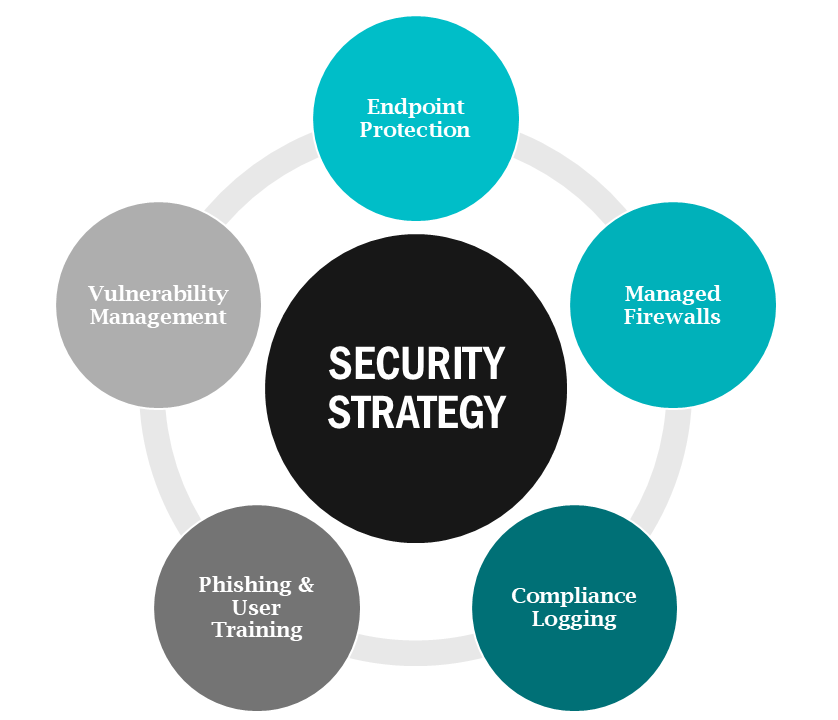
Need a more coordinated approach to cybersecurity?
Explore how thirtyone3 technology helps businesses strengthen security through layered safeguards, monitoring, risk reduction, and ongoing IT management.
Explore Cybersecurity Services
Conclusion
Cybersecurity for financial advisors is less about owning more tools and more about knowing whether the right safeguards are assigned, coordinated, monitored, tested, and improved over time. The five assumptions above can create blind spots in otherwise capable firms, particularly when responsibilities are divided among internal staff, IT providers, cloud vendors, custodians, and compliance resources.
Is Your Firm Confident in Its Cybersecurity Coverage?
If you are not sure where ownership, coverage, or evidence gaps exist, thirtyone3 technology can help you evaluate your current IT and cybersecurity environment and identify practical next steps for your firm.
Schedule a 30-Minute IT Fit Call